

Broadcast: News items
Keep a lookout for orchids
Posted on behalf of: Estates at Sussex
Last updated: Wednesday, 18 February 2026
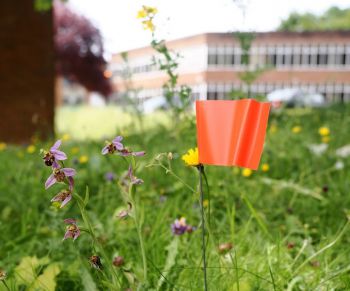
Bee orchid (Ophrys apifera var. flavescens)
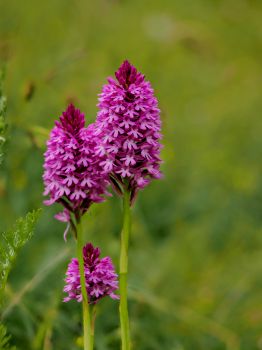
Pyramidal orchid (Anacamptis pyramidalis)
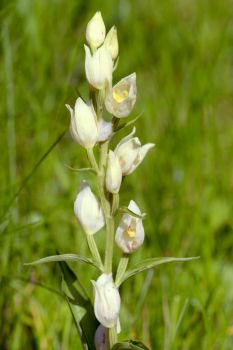
White helleborine (Cephalanthera damasonium)
As the sun starts to shine a little more, we are starting to see our local population of rare orchids bloom on campus.
You may have recently spotted small orange flags around campus – these are used to mark locations where we’ve already started seeing orchids in bloom. Each year the Estates Grounds team closely monitors the whole campus for signs of rare orchids, and marks their location to ensure that area is not mowed or otherwise disrupted.
We saw huge orchid activity last year, with around 450 orchids identified. Hot spots on campus include the Arts bridge, Falmer House lawns, IDS, Freeman, and Sussex House.
Our initial data for this year is showing an increase in bee orchid rosettes, one of our rarest species, and we are anticipating purple and pyramidal orchids to start showing soon.
If you do spot any orchids that haven’t been flagged, please contact the Estates Helpdesk and let us know where it is (ideally with a photo), so we can flag the area as an orchid site.
Our green campus sits within the unique Brighton and Lewes Downs biosphere, also known as “The Living Coast”, which is a designated UNESCO World Biosphere Region and enjoys a wide variety of plantlife growing upon chalk grasslands, dry chalk valleys, and floodplain meadows.
Learn more about biodiversity at Sussex, and how we're working towards becoming one of the most sustainable universities in the world.