Broadcast: News items
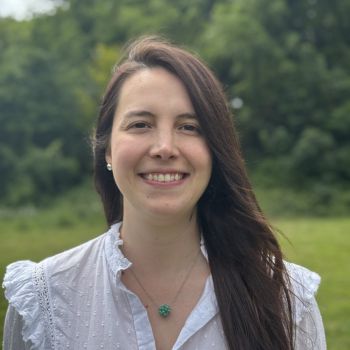
Spotlight on Researchers: Diana Maria Ramirez Sarmiento
Posted on behalf of: Sussex Researcher School
Last updated: Tuesday, 11 August 2026
The Journey to a PhD
Since secondary school, I have been involved in volunteer programmes in marginalised areas of Colombia affected by violence and poverty. I was shocked by the levels of exclusion and neglect that these communities suffered. This experience led me to study Law, as I believed that improving the precarious living conditions in these territories could be achieved through legal and institutional change. However, over time, I realised the limitations and structural challenges of Colombia's legal and justice system, which motivated me to pursue a dual degree in Political Science.
I subsequently earned my Masters in Political Science and became involved in teaching and research projects at the Universidad de los Andes and the Universidad de La Sabana in Colombia. I decided that undertaking a PhD in Development Studies at the Institute of Development Studies (IDS) was the best way to strengthen my research skills and produce valuable and contextually relevant knowledge for my country.
As a postgraduate student in Bogotá, I was actively engaged in advocacy for the Colombian Peace Agreement, which I considered an unprecedented opportunity to achieve peace and social justice. I was particularly convinced of the transformative potential of the Development Programmes with a Territorial-Based Focus (PDET, by its Spanish acronym), created by the Peace Agreement to transform rural communities deeply affected by violence and poverty.
As time passed, I became increasingly disappointed that the PDET process did not appear to generate the anticipated impact. My research is driven by a commitment to understanding and improving the PDET from the communities' perspectives and their lived experiences, and contributing to peacebuilding in Colombia's most marginalised territories.
The Research
My research explores how to improve participatory development and peacebuilding programmes in Colombia in ways that are transformative for the participants. I examine the enablers and barriers to participation by analysing how the interactions of power asymmetries, intersecting inequalities, and structural violence shape the transformative outcomes of participatory peacebuilding processes.
Participatory methods can be used as a façade to hide academic ‘extractivism’. Implementing participatory methods in a non-transformative way for participants may be useful for practitioners or academics, but it can become a means of extracting data without bringing about meaningful change for the communities involved.
I found a fieldwork context marked by participation fatigue. In Chaparral, my fieldwork site, people have been consulted and invited to participate several times, yet seen nothing meaningful happen as a result. During my fieldwork, I needed to balance achieving my research objectives with avoiding exacerbating people’s frustration with participation. I had to adjust my fieldwork plans and reorient my data-gathering methods to create a realistic and meaningful space for thinking about pathways to transformation.
The combination of participatory, ethnographic and qualitative research methods enabled me to engage with my participants lived experiences, knowledge and emotions. I used participant observation and in-depth interviews as complementary methods that generated knowledge through interactions and observations. My in-depth understanding of the realities of my participants has led to rich, contextualised data analysis in my research.
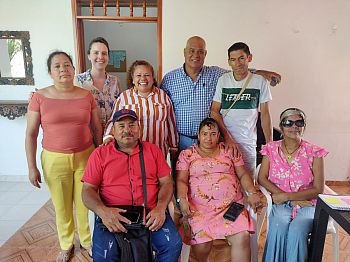
The life stories, resilience and resistance of Colombian rural communities were remarkably humbling and inspiring. Despite enduring the consequences of intense armed conflict and state neglect, these communities continue to organise and fight for a better quality of life for their families and territories . Since the signing of the Peace Agreement in 2016, more than 1,500 social leaders in Colombia have been assassinated. Therefore the effective implementation of the PDET is not only a matter of promoting sustainable development, but also of saving lives.
The findings of my research challenge the dominant literature’s approach to notions of transformation. Instead of focusing on transforming structural power relations, I found that communities articulate different and more immediate priorities. Participants wanted practical tools that could transform and improve their daily lives without directly confronting the status quo. These included promoting organic farms, enhancing the value-added use of agricultural products and expanding the professional aspirations of girls and women.
My thesis demonstrates significant shortcomings in the implementation of participatory peacebuilding programmes in Colombia. These shortcomings exacerbate the lack of development for the most marginalised communities and increase the likelihood of recurring cycles of direct violence. I hope that my findings contribute to improving the design of peacebuilding and development interventions, inform policymaking and help reorient participatory programmes towards meaningful transformation.
Achievements and the Future
During my PhD journey, I have published two book chapters, one paper and participated in a range of enriching and intellectually stimulating conferences and workshops. These have provided valuable opportunities to receive feedback and to discuss my research from an interdisciplinary perspective. Most recently, I presented my work on participatory methods in post-conflict contexts at Radboud University in Nijmegen, as well as at the XII Latin American Congress of Political Science in Lisbon.
I won the School of Education and Social Work Award for Critical Social Inquiry, which celebrates research that pushes the boundaries of critical analysis and reflection. I was awarded Researcher-Led Initiative funding, with an IDS colleague, which we used to hold a writing workshop for PhD students in Development. To support my studies, I received a grant from the Funds for Women Graduates and a scholarship from an agreement between the University of Sussex and La Fundación para el Futuro de Colombia (COLFUTURO).
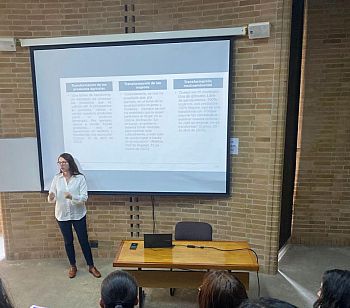
I served as a student representative, witnessing the challenges the UK education system faces and working to improve students' experience, especially international students. I have really enjoyed the multicultural and critical thinking environment at Sussex. Completing my PhD has been an exciting process. I feel grateful for the support of my kind and inspiring supervisors from the Participation Cluster at IDS, and for having shared knowledge, dreams and ideas with amazing people from across the world.
I have returned to my role as an Assistant Professor at Universidad de La Sabana in the Faculty of Law and Political Science. This return to teaching will provide an opportunity to integrate my doctoral research into the classroom and to develop pedagogical approaches that actively engage students with peacebuilding debates and participatory methodologies.
My main aspiration is to contribute to achieving some of the transformations expected by the communities in Chaparral, while continuing to deepen the work developed during my PhD. For this purpose, I am seeking alliances and collaborations to implement some of the transformative ideas proposed by my research participants.
Interview by Shona Clements, Sussex Researcher School
Read more Spotlights in the series.
Are you an PGR and like to be featured in the series?
If so Apply Here