US mini logoHome | A-Z Index | Help | Contact us    

Media and Film

Home | News & events | Admissions | Teaching | Research | People | Contacting us

Admissions

The Department of Media & Film offers a wide range of interdisciplinary programmes which can be studied at postgraduate level, or in combination with other subjects at undergraduate level.

Media Studies was introduced as a degree programme at the University of Sussex in 1989 and it was joined by a new degree course in 2001, Media Practice and Theory, that puts an even greater emphasis on production and media practice while still maintaining the distinctive critical and intellectual character of the original degrees we offer. In Autumn 2003 we became the new Department of Media and Cultural Studies in the School of Social Sciences and Cultural Studies, and we are excited about the new degrees we offer, built upon years of experience and attention to innovation. In Autumn 2004 the Department moved to the School of Humanities and combined with Film to become the Department of Media & Film.

What is intellectually and academically distinctive about Media Studies at the University of Sussex? The way we see it, is as an inherently interdisciplinary project, first of all. Over the past fourteen years or so, our group has firmly established its reputation in both teaching and research in this interdisciplinary vein. The special focus of our work is on the decisive cultural role of media systems within modern societies. The symbolic world we inhabit - the world of perceptions, meanings and values - would be radically different if the mass media did not exist. So too would the social, political, and economic worlds. The media have profoundly affected the techniques by which power is acquired and exercised. Our aim is to discover and explain what difference the media make to society and to enable you to develop your understanding of how they shape the way we live. We have particular research strengths in the areas of narrative and popular culture, and gender and sexuality, and you will be taught by scholars internationally respected in these fields. All of our faculty are active researchers and scholars engaged in contemporary debates, we hope that you will engage with us in the exciting task of unveiling the meaning of media and cultural life, whether through the modes of theory or practice.

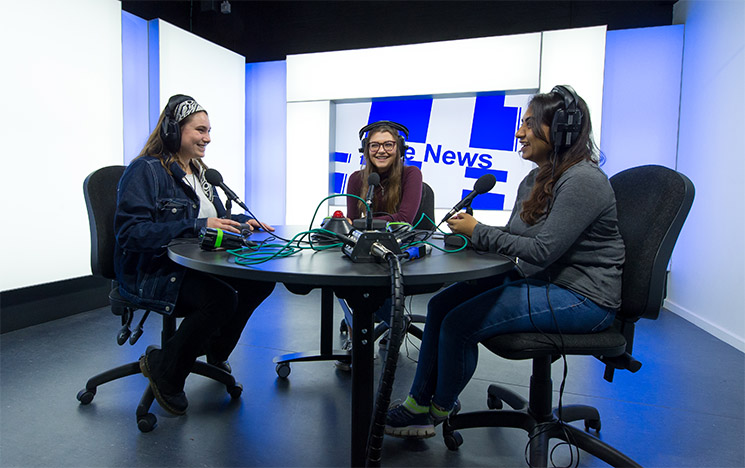
As a student at Sussex University on one of our programmes you will look at the power of the media to define the terms of political discourse and public life. You will analyse how different groups and interests are represented in film, television, the press, and other digital and broadcast media. You will study how the coming of media like radio and television or now, the 'new media' changed the nature of everyday, domestic life. And you will be asked to reflect on how media images and narratives inhabit our minds, how they become part of imaginations, fantasies, and desires. This is an ambitious and challenging project. You will come across different, sometimes difficult, approaches to such questions, and learn new methods of analysis and interpretation. Along the way you will learn new skills - skills of conceptual thought, research, critical reading, media analysis, writing in various styles, making individual or collective presentations, as well as practical production skills in video, digital imaging, photography and other media. These skills are important academically, but they should also be relevant to whatever you choose to do after you leave. By the time you have completed your course, you should have developed a rigorous critical understanding of the role of the media in today's world, and also learned skills and techniques that will equip you for a future career.

Through the period of your degree programme you will learn to reflect on the media in an informed, theoretically grounded way as you move from common introductory courses to specialist, research-led options. You will take courses that will enhance an interdisciplinary breadth of vision. You will work both independently and collaboratively. You will be able to take advantage of training and opportunities in technical and production skills. You may also experience the continental university system through study in Europe. This is what our programmes aim to offer you at the broadest level:

  • a critical and interdisciplinary perspective on the modern media that synthesizes traditions and approaches from the humanities and social sciences;
  • flexibility and responsiveness to developments in the intellectual field, and to empirical changes in the media we study;
  • a combination of theory and practice that builds your skills in research, argumentation and presentation;
  • opportunities for socially diverse students to acquire the capabilities and qualities necessary for success in work, further study or research.

More particularly, by the time you have completed the programme successfully, you will have developed a number of skills and capabilities:

  • you will understand the social, cultural, economic, and aesthetic importance of the contemporary media;
  • you will be able to reflect critically on your own media practices, whether as a producer or a consumer;
  • you will be able to develop a persuasive argument, based on independent research and planning, in writing, in oral presentations, and in other media;
  • you will use media techniques competently and confidently in fulfilling a brief;
  • you will be able to work effectively on collaborative projects, having acquired experience in working as members of a team.

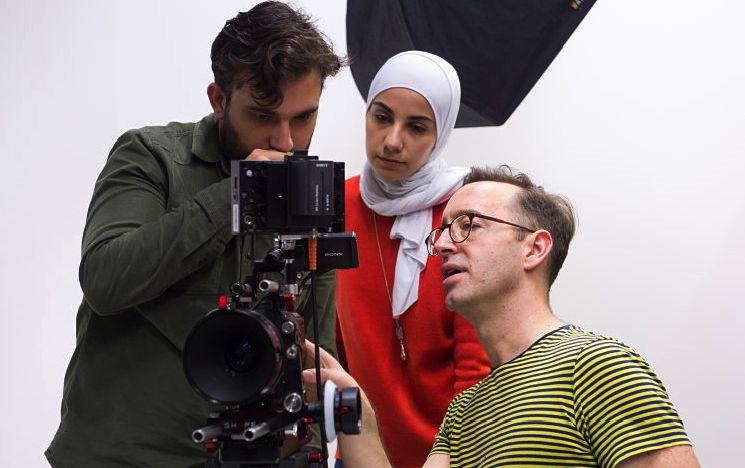
If you are a student in BA Media Practice and Theory, we aim to offer you all the above in addition to intensive experience in the production of several media, you will also be able to show high competence in the use of media production equipment and be able to define, develop, and execute your ideas in one or more medium.

You will be studying Media Studies with practice/production, in different combinations, usually as a joint subject with other degree programmes. All Media students follow a very similar syllabus, irrespective of combination with other subjects. At any one time, you will be studying Media courses and also courses from your joint major subject. When you are on a Media course, you will be with other Media students drawn from various combined degrees and other departments. When you are on a course in another department, you will be with other students from that department and other programmes, who may be studying a range of different courses. The result of this can be exciting and challenging, because you constantly meet perspectives different from your own.

On the academic side, there are significant numbers of full-time and part-time faculty and tutors responsible for all the teaching for over 600 students who are registered in the Department to take our courses. Every course in our syllabus has a particular named academic member of staff responsible for its running. As well as specialist tutors and full time members of faculty, sometimes our own graduate students also play a supporting role in the teaching. Often they are at the 'cutting edge' of new work in the subject, and can be the most imaginative and enthusiastic in teaching. New lecturers and graduate students all receive support, training, and supervision in their teaching.

If you choose to study Media at Sussex, you will find yourself in a highly-rated group in a highly-rated university. We are regularly ranked by newspapers such as The Times and The Guardian in the top Media & Cultural Studies departments in the country. University teachers are required to carry out their own research as well as to teach, and we also pride ourselves on our research. Our staff have national and international reputations for their scholarship, whether it is traditional academic, or media practice research. Research interests are drawn on in our teaching, and all students benefit from this.

If you would like specific information on admissions for undergraduate programmes after reading our prospectus, please contact Dr Ben Highmore. Similarly, if you would like to talk to someone about admissions for postgraduate courses, please contact Dr Kate Lacey for taught programmes, or Professor Nick Till for research degrees. We look forward to hearing from you.

see also

Maintained by: Pat Mounce (P.A.Mounce@sussex.ac.uk) A-Z Index | Help | Contact us